Can You Freeze Broccoli and Cauliflower? Blanching Guide for Best Texture
Blanching is a short heat treatment given to vegetables before freezing, not to cook them but to deactivate enzymes that cause colour and texture loss. For broccoli and cauliflower, this step is what preserves their green hue, keeps the florets separate, and makes them usable after months in the freezer.
Without it, frozen broccoli turns into an olive-green slush—not spoiled, just unrecognisable. The good news is that a straightforward blanching process, followed by a crucial drying step, produces florets that hold their own in stir-fries, curries, or gratins.
The texture fix: why blanching works
Freezing slows down enzymatic activity but doesn’t stop it completely. Enzymes continue to break down cell walls, slowly turning firm florets soft. A brief dunk in boiling water deactivates these enzymes, preserving texture.
📺 Watch: Preserving Broccoli & Cauliflower
Recommended blanching times are around three minutes for broccoli and ninety seconds for cauliflower. The vegetables must then be plunged straight into an ice bath to halt the cooking process. Leaving them in hot water leads to grey, mushy florets before they even reach the freezer.
Many guides overlook the next critical step: thorough drying. After the ice bath, spread the florets on a clean tea towel (paid link)See on Amazon and pat them completely dry. Excess surface water freezes into crystals that can damage cell walls, reducing quality. Skipping this step often results in a solid, icy mass of soggy florets. Properly dried florets freeze separately, ready to be used a handful at a time.
Deciding when to blanch
For most cooked dishes where texture matters, blanching is the better choice. If you want roasted broccoli with some char or cauliflower cheese with structural integrity, blanch first.
You can skip blanching for soups, stews, or curries where the vegetable will be cooked until soft anyway. If you’re planning to blend a cauliflower glut into soup, saving the blanching time is reasonable. When in doubt, blanch—it’s a short process that safeguards quality for the majority of uses.
Packing and storage for quality
After blanching, cooling, and drying, the packing method determines long-term results. Begin by open-freezing: spread the florets in a single layer on a baking tray and freeze until solid. This prevents them from sticking together.
Transfer the frozen florets to a freezer bag. Use a method like the straw trick to remove as much air as possible before sealing. Reducing air exposure helps limit freezer burn and quality loss over time. Label the bag clearly with the contents and date; a proper freezer-safe label is more reliable than makeshift solutions.
For regular cooks, portioning before freezing saves time. Bagging a couple of hundred grams per portion is ideal for a quick stir-fry for two.
Thawing without spoiling the results
Avoid thawing at room temperature, which can make the florets waterlogged. For most dishes, there’s no need to thaw—add frozen florets directly to a hot wok, roasting tin, or simmering soup. They’ll heat through in minutes.
If a recipe requires thawed florets, such as for a gratin, do it slowly in the fridge overnight. Place them on a plate lined with kitchen paper to absorb any moisture, preserving the texture protected by blanching.
Common questions answered
Can I freeze broccoli and cauliflower together?
Yes, but blanch them separately. Broccoli needs a longer blanching time than cauliflower. Blanching cauliflower for the full broccoli time will overcook it. Process the broccoli first, then the cauliflower.
How long do they keep in the freezer?
For the best texture, use frozen vegetables within a few months. Quality gradually declines with longer storage.
My frozen vegetables are mushy. Can they be saved?
They won’t regain a crisp texture, but they’re still useful. Blend mushy broccoli or cauliflower into soup, stir into a sauce, or add to a curry where the soft texture won’t be noticeable.
Practical blanching sequence
The recommended blanching time for broccoli is approximately 3 minutes, while cauliflower only needs about 90 seconds. For both, the ice bath should last until the florets are completely cold. If you plan to freeze mixed florets, it is essential to blanch them separately to avoid overcooking the cauliflower.
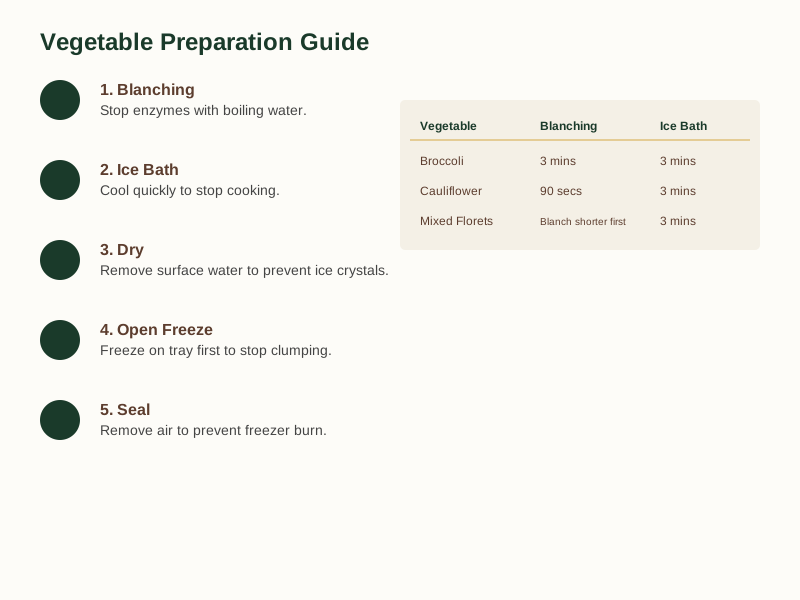
The complete freezing sequence
The process boils down to a practical sequence: brief heat treatment, rapid cooling, thorough drying, then a single-layer freeze. Getting each step right ensures you have usable florets weeks later.
An organised system for labelling and portioning means you’ll actually use what you freeze.
Download the Free Freezer Labelling and Portioning Checklist to keep your freezer organised.
More on vegetable freezing
Visit our vegetable hub to check which other vegetables need similar treatment: Freezing Vegetables, Fruit and Herbs: What Goes Soft and What Holds Up .
Sources & Further Reading
Note: General guidance only, verify details with a qualified professional or official source.