Can You Freeze Cooked Pasta? How to Stop It Turning to a Single Lump
When cooked pasta cools and freezes, its starch continues to absorb moisture and undergoes retrogradation – a process where starch molecules realign and firm up. This is what causes strands to fuse together in the freezer. Understanding this mechanism is key to preventing the frustrating frozen block.
Pasta can be frozen successfully. The difference between a solid lump and separate, usable strands comes down to preparation. Undercook it slightly, coat with oil, and portion it properly – your frozen pasta will come back ready for pasta bakes, soups, or quick meals. Skip these steps and you’ll likely face the rock-hard mass. This guide explains the method, the reasoning, and how to use the results effectively.
The Science Behind Frozen Pasta Clumping
Freezing doesn’t ruin pasta’s flavour but can damage its texture through starch behaviour.
📺 Watch: 5 Simple & Easy Pasta Dishes With Jamie Oliver
During cooking, starch in the flour absorbs water and swells in a process called gelatinisation. This continues as the pasta cools, with starches binding together and drawing in moisture. When frozen, ice crystals form inside and around the strands. These crystals can damage the pasta’s structure, and upon thawing, the pasta has lost some of the integrity that kept strands distinct. The starch and moisture changes make the surface sticky, often resulting in a clumped, soft mass.
Sauced pasta behaves differently. A thick tomato or meat sauce coats the strands, creating a barrier that reduces direct starch-to-starch contact. Tomato-based sauces tend to freeze reasonably well. Cream-based sauces present different challenges – dairy can separate or become grainy when frozen and reheated. While the pasta itself may not clump as much, the sauce quality may suffer.
Even sauced pasta benefits from careful freezing. Minimising air exposure reduces the risk of freezer burn.
Preventing Clumping: A Practical Method
Two key steps address the starch behaviour explained above.
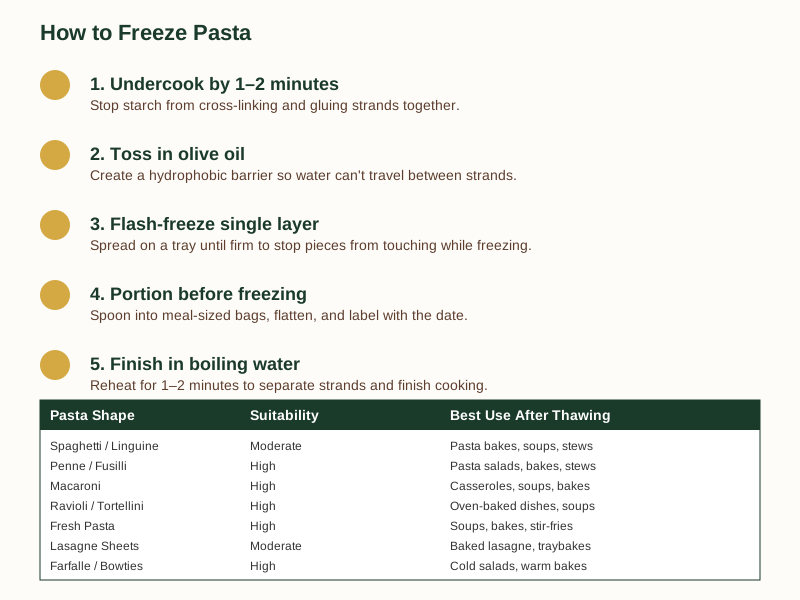
Undercook by 1–2 minutes. Cook pasta to just before al dente, so it feels firmer than you’d serve immediately. Less cooking time means less starch has gelatinised and migrated to the strand surfaces. This reduces the free starch available to cause sticking when frozen. The pasta finishes cooking during reheating rather than starting from an overdone state.
Coat with oil immediately after draining. A light drizzle of olive oil, tossed through the pasta, helps reduce sticking. The oil creates a barrier that limits water movement between strands, interrupting the starch gelatinisation that causes clumping. This step is particularly important for plain pasta. Without it, even flash-freezing may not prevent tangling, especially with long strands like spaghetti.
Flash-freeze in a single layer if possible. Spread the oiled, slightly undercooked pasta on a baking tray in one layer. Freeze for about an hour until firm. Then transfer to a freezer bag, removing as much air as possible. Spreading the pieces helps reduce them freezing together – once solid individually, they’re less likely to clump in a bag.
Portion before freezing. Divide the flash-frozen pasta into meal-sized portions in freezer bags. Flatten each portion for efficient stacking and label with the date. Portioning means you defrost only what you need instead of chipping away at a large block.
The complete method: slightly undercook pasta → drain → toss with a little oil → spread on a tray → freeze until firm → bag in portions, remove air, label → return to freezer.
The result is pasta that stays separate and holds its shape reasonably well. The texture softens slightly after freezing, which is normal, but it works well in cooked dishes. For pasta bakes, soups, and stews, the difference from fresh is minimal.
Long-strand pasta like spaghetti is trickier to separate after freezing than short shapes like penne or fusilli. If freezing spaghetti regularly, consider cutting it into shorter lengths before freezing for easier handling.
Thawing and Using Frozen Pasta
For anything safety-related, follow the Food Standards Agency guidance on cooling, thawing and refreezing cooked food, linked below.
📺 Watch: Perfect Mushroom Pasta | Jamie Oliver
Two reliable reheating methods exist. You can drop frozen pasta directly into boiling water until heated through – this finishes the cooking and separates any sticking strands. Alternatively, use a microwave on a defrost setting, stirring halfway, though results can be uneven with plain pasta.
Flavour generally holds up well – freezing affects texture more than taste. The main change is in bite: frozen pasta tends to be slightly softer than fresh, which is why finishing it in boiling water or cooking it further in a sauce works better than serving it plain. It’s best to avoid freezing pasta with cheese, as some cheeses, particularly hard grated varieties, may change texture after freezing – becoming dry, crumbly, or grainy when thawed. For best results, freeze pasta plain and add cheese after reheating. For best quality, use frozen pasta within a few months. The same freezing method can be applied to fresh pasta from the deli counter. When choosing a shape, short shapes with hollows or ridges like penne, fusilli, and macaroni generally handle freezing better than long strands as they are less prone to tangling.
Consider how you’ll use frozen pasta, as not all dishes suit it equally.
Good uses: pasta bakes (oven heating crisps the top and heats evenly), soups and stews (pasta cooks further in broth and absorbs flavour), pasta salads where pasta is tossed warm with dressing (better absorption), and any dish where pasta will be cooked again with other ingredients.
Less suitable: delicate cold pasta salads served plain, or dishes where a firm, distinct bite is essential – freezing softens pasta slightly, which may disappoint if texture is the main focus.
When batch-cooking sauces separately, freezing plain pasta provides a neutral base you can pair with any defrosted sauce. This flexibility is the real value – a stash of pasta ready for whatever meal you plan.
Now you know what to look for and how to portion properly – Download the Free Freezer Labelling and Portioning Checklist to ensure every batch is clearly labelled and meal-sized.
Flash-freezing is particularly effective for pasta. Spreading pieces on a tray and freezing until firm helps keep them separate. The alternative – trying to separate clumped spaghetti from a bag – can be frustrating and may lead to waste.
Pasta Freezing Guide
| Pasta Shape | Freezing Suitability | Best Use After Thawing |
|---|---|---|
| Spaghetti / Linguine | Moderate (can tangle) | Pasta bakes, soups, stews |
| Penne / Fusilli | High (shape holds well) | Pasta salads, bakes, stews |
| Macaroni | High (easy to portion) | Casseroles, soups, bakes |
| Ravioli / Tortellini | High (sauce helps) | Oven-baked dishes, soups |
| Fresh Pasta | High (prep helps) | Soups, bakes, stir-fries |
| Lasagne Sheets | Moderate (layering works) | Baked lasagne, traybakes |
| Farfalle / Bowties | High (sauce clings) | Cold salads, warm bakes |
📺 Watch: 3 Minute Tomato Pasta Sauce | Jamie Oliver & Davina McCall
Practical Freezing Notes
The method is straightforward: undercook slightly, coat with oil, flash-freeze spread out, then bag in portions. This transforms leftover pasta from a solid lump into a convenient staple.
You’re building a useful habit. Knowing these steps helps reduce food waste from leftover pasta. Batch-cook a few portions and you have the foundation for several quick meals without resorting to takeaways.
Proper labelling and portioning turn your freezer into a practical tool rather than a food graveyard. For a simple reference guide on techniques, labelling, and portion sizes, get the Freezer Labelling and Portioning Checklist. It’s a practical resource that can help reduce food waste.
When considering which pasta to freeze, remember that long thin strands like spaghetti present the biggest challenge, while short ridged shapes like rigatoni tend to work best. For broader context on where pasta fits within freezing cooked meals overall, including which dishes it complements well, our hub on freezing leftovers provides the complete picture.
Related Content
Our Freezing Leftovers and Cooked Meals: Which Ones Come Back Well covers the full range of meal freezing.
References
Note: General guidance only, verify details with a qualified professional or official source.