How to Freeze Cooked Rice Without It Going Mushy
As an Amazon Associate we earn from qualifying purchases. This page contains affiliate links — if you buy through them, we earn a small commission at no extra cost to you.
Cooked rice needs cooling and freezing properly, and for the safety side the Food Standards Agency guidance linked below is the place to look. How quickly and carefully you handle it also affects texture.
You’ve likely opened the freezer to find a solid, icy block of rice that resembles wallpaper paste more than food. This common frustration puts many people off freezing rice, which is a shame because batch-cooked rice is incredibly useful for quick meals. Mushy results aren’t inevitable — there’s one step most guides skip that makes all the difference.
Preventing Mushy Rice: The Surface Moisture Factor
Standard advice focuses on quick cooling and prompt freezing, but often misses the core texture issue: excess surface moisture. When rice is cooked, grains become saturated. Freezing rice while this moisture remains encourages large ice crystal formation. These crystals can damage the grain structure, leading to a soft, gummy texture upon reheating instead of separate, fluffy grains.
📺 Watch: Can You Freeze Rice? Cheese? Pasta? … and More!
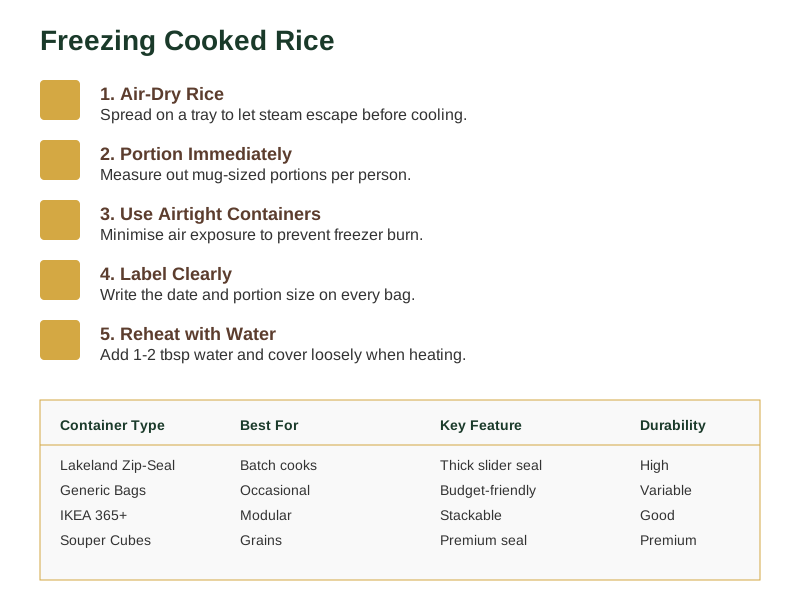
A simple adjustment helps significantly: spread your cooked rice on a wide, flat tray like a baking sheet (paid link)See on Amazon as soon as it’s done. Let it stand briefly to allow excess surface moisture to evaporate. You’re not aiming to dry it out completely, just to reduce the moisture that would otherwise turn into problematic ice crystals. This air-drying step dramatically increases surface area, helping moisture escape much faster than if left in the cooking pot.
Combined with rapid cooling, this approach helps minimise clumping. While cold water baths can accelerate cooling, the air-dry step specifically addresses the surface moisture that contributes to poor texture. The result after reheating is noticeably improved — not identical to fresh rice, but far superior to the typical frozen result.
Cooling and Freezing the Rice
For cooling and freezing times, follow the Food Standards Agency guidance linked below.
📺 Watch: Quick Tips: Freezing and Reheating Cooked Rice | One Pot Chef
After cooking, spread the rice on a tray to air-dry briefly. While this happens, prepare your portion containers. Portion the rice into airtight containers and transfer them to the freezer promptly. Using shallow containers or trays can help speed up the cooling process if you’re short of time.
Placing a container of rice in a bowl of cold water (refreshing the water as it warms) can further accelerate cooling. This method pairs well with the initial air-drying step. For comprehensive guidance on cooling and reheating practices, consult the FSA and NHS resources directly.
Practical Portioning and Storage
Proper packing is essential once rice has been air-dried and cooled. Whether using airtight freezer bags or solid containers, the goal is to minimise air exposure to prevent freezer burn and oxidation over time.
Lakeland Zip-Seal bags, 18×20 cm, pack of 24 (paid link) are a pack of 24 bags at 18×20 cm, with a zip seal and a write-on strip. They are one size, not a set of larger bags. While more expensive initially, their reusability can make them cost-effective. Standard supermarket freezer bags work for occasional use but vary in seal quality and aren’t designed for frequent opening. For regular batch cooking, an IKEA 365+ 750 ml box (paid link) holds about one portion of rice, and Souper Cubes 1-cup moulds, 2-pack (paid link) are two trays of 1-cup portions. Budget silicone moulds are a basic entry point but lack the rigidity and seal of premium options.
Freezing rice in one large block makes portioning difficult. Dividing it into individual meal portions (roughly a mugful per person) allows you to reheat only what’s needed, avoiding the quality loss that comes with refreezing. Always check NHS and FSA advice regarding refreezing.
Labelling every container or bag with the date and contents is a simple step that prevents food waste. A roll of practical 1,000 freezer labels, 1×2 in (paid link) and a pen is a small investment that saves more food than any gadget.
See Freezer Labels on Amazon → (paid link)
Check Souper Cubes price → (paid link)
Ensure your system is solid — Download the Free Freezer Labelling and Portioning Checklist to cover the basics before your next batch cook.
Effective Reheating Technique
Reheating method is critical. Microwaving frozen rice on full power in a sealed container traps steam, making grains soggy and undoing the preparation work.
A reliable method involves adding a splash of cold water per portion, loosely covering the container (leaving a vent), and microwaving according to your appliance’s instructions. Stirring midway helps it heat evenly. The added water generates steam that helps re-plump the grains without overcooking them.
For reheating cooked rice, follow the Food Standards Agency and NHS guidance linked below.
Common Questions About Freezing Rice
📺 Watch: Creamy Rice Pudding Recipe
Does rice type affect freezing results?
Long-grain white rice generally maintains its texture best after freezing and reheating. Brown rice can be frozen but may become softer. Short-grain and sticky rice varieties tend to become very soft and lose their distinct structure, making them less ideal for freezing if you want separate grains.
What’s the maximum freezer storage time?
Frozen rice is best used within a few weeks for optimal texture. Label portions with dates to manage rotation. Consult FSA guidance for specific storage recommendations.
What are the thawing options?
You can thaw rice slowly in the refrigerator if planned ahead. For quicker meals, frozen rice can go directly into a pan with a little water and be heated through. For reheating, follow the FSA guidance linked below.
Best uses for frozen rice?
Frozen rice works well in stir-fries, fried rice, grain bowls, and as an accompaniment to curries and stews. It’s less suitable for dishes requiring firm, separate grains like rice salads, where fresh-cooked rice is preferable.
Does freezing change nutritional content?
This guide focuses on texture. For specific nutritional information, consult NHS resources or dietary guidance relevant to your needs.
Proper preparation makes frozen rice a practical staple. The combination of air-drying before freezing and the final reheating water trick creates reliable results. For more on how rice fits alongside other cooked meals with similar fast-cooling needs, our hub shows the complete picture.
Download the Free Freezer Labelling and Portioning Checklist to implement these steps effectively.
Further Reading
References
As an Amazon Associate we earn from qualifying purchases. The products linked above are ones we think are worth a look.
Note: General guidance only, verify details with a qualified professional or official source.