Can You Freeze Cream? The Difference Between Double, Single and Whipping Cream
Freezing can permanently damage cream’s ability to whip, but it often still works for cooking. This guide separates cooking cream from whipping cream.
That distinction matters when you’re left with a half-used carton. Many articles say “yes, you can freeze cream” and stop there. What they should tell you is which cream, what it’ll be like afterwards, and what to actually use it for. A thawed carton of single cream behaves very differently from a thawed carton of double cream — confusing them leads to lumpy, split liquid instead of whipped peaks.
How fat content determines freezing success
Cream is an emulsion — fat droplets suspended in water, held together by proteins. When frozen, the water forms ice crystals. More water means larger crystals that can break the emulsion structure. Fat percentage indicates how much water is present, predicting the freeze’s impact.
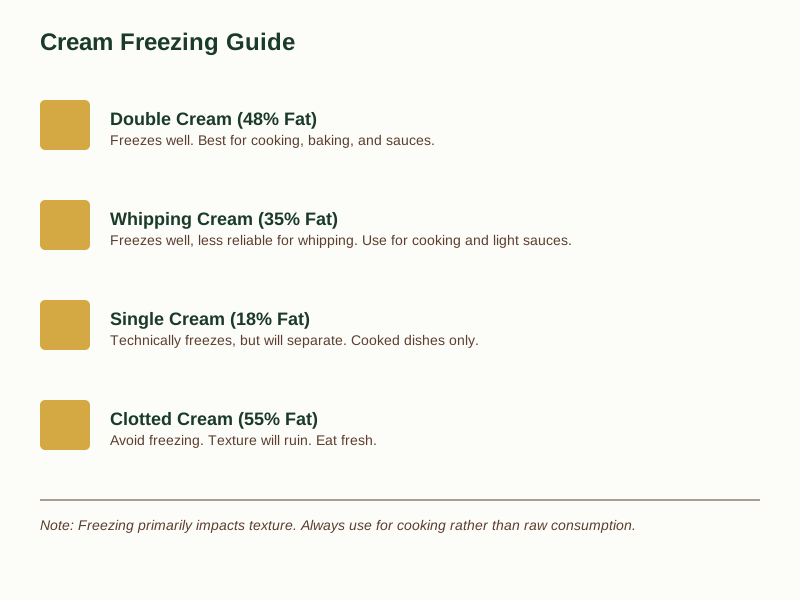
Double cream has a legal minimum of 48% milk fat. With less water and a stronger emulsion, it generally withstands freezing better than lower-fat options. Many find it still whips after thawing, though perhaps not as firmly as fresh. It works well folded into pasta sauces, soups, or as a base for desserts.
Single cream requires at least 18% milk fat. The weaker emulsion and higher water content make it susceptible to freezing damage. Thawing often results in separation — a watery liquid with grainy solids. This makes it unsuitable for whipping. It’s best reserved for cooked dishes like risottos or curries where heat helps incorporate it.
Whipping cream typically contains around 35% milk fat. Its post-thaw performance sits between single and double cream. It may whip less reliably than double cream but handles cooking applications adequately.
Whipping cream before freezing can improve results. Trapping air into the intact fat structure helps it hold together better upon thawing. This method works well for portioning dollops of chantilly cream.
| Type | Fat Content | Freezes Well? | Whips After Thawing? | Best Used For |
|---|---|---|---|---|
| Double cream | 48% | Yes | Often, though not identical to fresh | Cooking, baking, sauces |
| Whipping cream | 35% | Yes | Sometimes, less reliably | Cooking, light sauces |
| Single cream | 18% | Texture changes significantly | No | Cooked dishes only |
| Clotted cream | ~55% | Not recommended | N/A | Eat fresh |
Practical freezing and thawing steps
Proper technique prevents waste and preserves quality.
Portion before freezing. Ice cube trays allow you to freeze small amounts. Tray capacities vary, but frozen cubes provide convenient portions for sauces or soups. Freeze cubes solid on a tray before transferring to a freezer bag to prevent sticking. For larger amounts, use small airtight containers or heavy freezer bags with air removed to minimise freezer burn.
For whipped cream, portion dollops onto a lined baking tray, freeze until solid, then bag them individually.
Thaw gradually in the refrigerator. This controlled environment helps minimise texture issues. If short on time, submerge the sealed container in cold water, changing the water regularly. Avoid thawing at room temperature, which can encourage separation.
Avoid refreezing thawed cream. For the safety side of refreezing thawed food, follow the Food Standards Agency guidance. In terms of quality, repeated freezing and thawing cycles tend to further break down the emulsion, leading to poorer texture. Freeze in portions that match your typical usage to avoid needing to refreeze.
Label bags clearly — frozen cream looks similar to milk or custard.
Get your freezer organised — Download the Free Freezer Labelling and Portioning Checklist to track what you’ve frozen and when.
Why clotted cream is different
Clotted cream’s unique texture comes from a specific heating process during production. Freezing typically causes the fats to separate, resulting in a grainy consistency that loses the characteristic spreadable quality. For enjoying with scones, it’s best consumed fresh.
📺 Watch: Can You Freeze Pastry Cream? (Custard Cream)
Cream freezing reference
| Type | Fat Content | Freezes Well | Whips After Thawing | Best Used For |
|---|---|---|---|---|
| Double | 48% | Yes | Often | Cooking, baking, sauces |
| Whipping | 35% | Yes | Sometimes | Cooking, light sauces |
| Single | 18% | With texture changes | No | Cooked dishes only |
| Clotted | 55% | No | N/A | Eat fresh |
📺 Watch: The Secret to Freeze Dried Sour Cream
Final considerations
Choose your freezing strategy based on intended use. Double cream generally performs best for cooking, while single cream is limited to cooked dishes where texture matters less. Whipping before freezing offers the most reliable method for dessert applications.
Flavour is often well-preserved after freezing, but texture is the primary change. In cooked dishes where cream is incorporated, the difference may be negligible. For fresh applications like toppings, the altered texture is more noticeable. Quality is best when used within a few months,. Texture and flavour can degrade over longer periods. Label with the freeze date and consult official storage advice.
Remember that cream expands when frozen, so leave room in the container. For small cooking portions, ice cube trays prevent waste. This approach to dairy emulsions applies to other ingredients too — our Freezing Dairy, Eggs and Baking hub covers how different products respond to freezing.
Get the Freezer Labelling and Portioning Checklist to reduce food waste through better organisation.
Related Guides
For a complete overview, see our Freezing Dairy, Eggs and Baking: What Survives, What Changes and What to Use It For .
Sources & Further Reading
Note: This is general guidance only. Always verify specific storage details with official food safety resources or the manufacturer’s packaging.