How to Freeze Pancakes, Sandwiches and Pizza for Quick Lunches
As an Amazon Associate we earn from qualifying purchases. This page contains affiliate links — if you buy through them, we earn a small commission at no extra cost to you.
A frozen pancake can be ready in 90 seconds in a toaster. A pizza slice needs about 4 minutes in an oven. Reheating a frozen sandwich filling takes roughly 2 minutes on a pan. Compare that to the time it takes to make each from scratch — mixing batter, waiting for dough to rise, assembling ingredients — and the freezer’s appeal for quick lunches becomes clear. But only if the quality holds up.
Done wrong, you end up with lunches that are technically edible but nobody’s eating them willingly. The difference is knowing what survives the cold and what doesn’t. This is mainly a quality question: a bad frozen sandwich will put you off your lunch. For food safety, follow the Food Standards Agency’s advice. Here’s what actually works, what to avoid, and the bits of kit worth having.
Which Lunches Survive the Freezer Best?
Most lunch-prep guides skip a key point: the freezer is often better for assembled sandwiches than for their individual parts. You can freeze bread, cheese and cooked meat separately — and sometimes you should — but if you want a sandwich that works straight from the freezer, build it first and freeze it whole.
📺 Watch: Best Air Fryer Grilled Cheese | Easy, Kid-Friendly Recipe
The reason is moisture. High-water fillings — cucumber, tomato, lettuce, mayonnaise — release liquid as they freeze. That water soaks into the bread, and by the time you eat it, you’ve got a sodden sandwich that falls apart. It’s the classic problem, and it happens whenever someone freezes a ham and tomato sandwich expecting it to behave like the fresh version.
The fix is straightforward: sturdy bread and low-moisture fillings. Sourdough, wholemeal, or a dense farmhouse loaf copes with freezing and thawing far better than a thin sliced white bloomer. The denser the crumb, the less it absorbs and the better it holds together.
For fillings, the rule is simple: cooked and dense beats raw and wet.
What freezes well in an assembled sandwich:
- Hard cheese — cheddar, gruyère, emmental
- Cooked meats — roast chicken, ham, bacon bits
- Jam, nut butters, honey
- Grated carrot, pickle
What to leave out when assembling for the freezer:
- Cucumber (releases too much water)
- Tomato (turns mushy)
- Lettuce or salad leaves (becomes slimy)
- Mayonnaise or soft spreads (can separate)
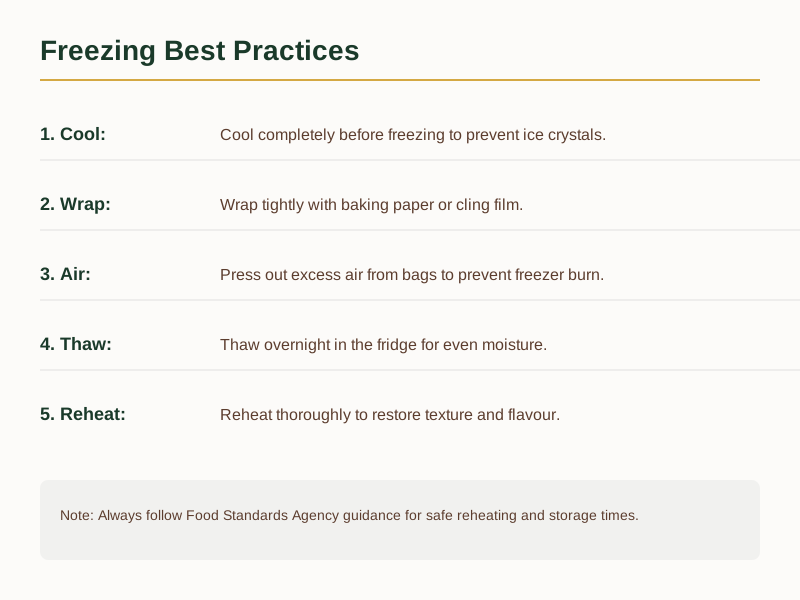
The method matters as much as the ingredients. Wrap each sandwich tightly in cling film or a freezer bag, press out as much air as possible, and freeze flat. Once solid, you can stack them. Thaw in the fridge, which helps preserve texture, and follow the Food Standards Agency guidance for how long thawed food keeps.
If you’re batch-prepping, freezing bread in bulk first is worth doing separately — that way you’ve got the building blocks ready whatever the filling situation.
Pancakes: A Reliable Freezer Staple
Pancakes freeze and reheat conveniently. The trick is nailing the pre-freeze step.
Cool them completely before you do anything else. Warm pancakes in a sealed bag create condensation, which creates ice crystals, which creates a rubbery result. Spread them on a wire rack, give them a little while, and you’re good to go.
When you stack them for the freezer, separate each pancake with a sheet of baking paper. It’s a small faff but it means you can pull out exactly one pancake on a Tuesday morning without having to smash a frozen pancake block with a spatula. The same logic applies to portion trays like Souper Cubes 1-cup moulds, 2-pack (paid link) — anything that prevents pieces fusing together in the freezer pays for itself in convenience.
Check Souper Cubes price → (paid link)
Reheating is a choice between speed and texture. The microwave gets you eating quickly, but the pancake comes back a bit soft and elastic. A toaster on a medium setting crisps it up nicely — better for a proper breakfast feel. Either way, don’t leave them in the freezer for too long; they gradually dry out even in a well-sealed bag.
Making Frozen Pizza Work for You
Pizza is honest about what it can and can’t be after freezing. The base will never be quite as crisp as it was fresh from the oven. But it can still be genuinely good — provided you set your expectations.
📺 Watch: The Best Ways to Reheat Leftover Pizza (And the Worst)
Thicker crusts may retain a more bread-like texture after freezing. The dough has more structure to begin with. Thin-and-crispy pizza, on the other hand, often goes from brittle to bendy. Not a disaster, but worth knowing before you freeze a whole takeaway.
Pack individual slices rather than the whole pizza. It’s easier to thaw exactly what you need, and stacked slices thaw faster and more evenly than a full box. Wrap each slice in baking paper, then pop them all in a freezer bag with the air pressed out.
The reheat method matters more here than for most foods. A microwave will heat it through but leave you with a soggy base — fine if you’re in a hurry. The oven or an air fryer, following the pack or the dish’s own instructions until it is hot all the way through, brings the base back to something you’d actually choose to eat.
One heads-up: high-moisture toppings may release liquid and soften the slice. Load up with cheese and cured meats instead; they’ll hold their shape and flavour better.
Essential Kit for Freezing Lunches
You don’t need much to do this properly, but the right basics make a noticeable difference.
For bags, look for options with a good seal. Some reusable bags are thicker and more durable for repeated use. Standard bags work for light duties.
For containers, the Joseph Joseph Nest Lock 5-piece lunch set (paid link) set is a solid choice — the nesting design saves cupboard space. The trade-off is the price: it’s not cheap. If you’d rather not spend that much, modular container sets are an honest budget pick. They seal well enough for most purposes. The only thing to watch is staining from tomato-based pizza toppings — it happens, and it’s not the end of the world, but worth knowing.
View the Nest Lock 5-piece lunch set on Amazon → (paid link)
One thing worth spending a few pounds on regardless of budget: proper freezer labels . By the time you find a nameless bag in the back of the freezer it’s a guessing game nobody wins. Labels that withstand the cold make a real difference to not wasting food.
Vacuum sealers are useful for some jobs — but for sandwiches, pancakes and pizza, a good freezer bag with the air pressed out does the same job for a fraction of the cost. Don’t buy one just for this.
Now you know what to look for — Download the Free Freezer Labelling and Portioning Checklist and get your batch prep properly organised.
Practical Freezing Guide
| Item | Best Bread Type | Best Fillings | Freezing Method | Reheating Tip |
|---|---|---|---|---|
| Sandwich | Sourdough, wholemeal, dense farmhouse | Hard cheese, cooked meats, jam, nut butters | Wrap tightly, press out air, freeze flat | Thaw overnight in fridge |
| Pancakes | Any type | Any filling | Cool completely, stack with baking paper | Toaster for crispiness |
| Pizza | Thick-crust, bread-based | Cheese, cured meats | Wrap individual slices in baking paper | Oven or air fryer for base crispness |
| Bread | Any type | N/A | Slice and freeze in bags | Toast before eating |
| Cooked Meat | Any type | N/A | Slice and freeze | Reheat thoroughly |
| Cheese | Any type | N/A | Grate or slice and freeze | Use as is or thaw slightly |
Getting the Timing Right
The freezer is a tool for busy days, not every day. The sandwiches that work — dense bread, dry fillings, wrapped tight, thawed slowly — will reward you with lunches that actually get eaten.
For best results, freeze pancakes the same day you make the batch. For sandwiches, freeze the components separately rather than assembled if they contain moist ingredients. With pizza, freeze it soon after it arrives, or bake it, to lock in quality.
These quick-lunch items are part of a bigger picture. For context on how they fit into managing a full range of cooked meals, our hub on freezing leftovers and cooked meals provides the complete overview.
Related Guides
Sources & Further Reading
- Food Standards Agency - Guidance on chilling, freezing and defrosting food.
As an Amazon Associate we earn from qualifying purchases. The products linked above are ones we think are worth a look.
Note: General guidance only, verify details with a qualified professional or official source.