Can You Freeze Pastry? Puff, Shortcrust and Filo – What Works
Puff pastry’s flaky layers are created by butter that’s repeatedly folded into the dough, and freezing actually preserves this intricate structure better than refrigeration. While shortcrust and filo have different limitations, puff’s butter layers make it the pastry that benefits most from freezing. This difference in how each type responds to cold storage determines what you can realistically expect from frozen pastry.
Which Pastries Freeze Well?
Puff pastry performs best when frozen raw. The delicate layers that create its characteristic rise are preserved by freezing. Baking it first then freezing often leads to disappointing results as the structure can collapse. For best results, roll and cut the pastry before freezing it on a tray until solid, then transfer to airtight packaging. Many manufacturers recommend baking directly from frozen for optimal results.
📺 Watch: Can You Freeze Pastry Cream? (Custard Cream)
Shortcrust pastry is the most versatile option for freezing. It handles the process well whether raw or pre-baked. Raw shortcrust maintains its workable texture after thawing, while blind-baked cases retain their shape though may lose some crispness. This makes it ideal for preparing pie bases in advance or storing leftover dough.
Filo pastry presents the biggest challenge. Its extremely thin sheets are particularly vulnerable to moisture loss, which can make them brittle and difficult to handle after thawing. If the pastry is already showing signs of drying before freezing, the results are unlikely to be satisfactory. For the best chance of success, freeze filo while still sealed in its original packaging, or portion it with baking parchment (paid link)See on Amazon between sheets before freezing.
Quick Decision Guide
- Puff (uncooked) — Freeze with confidence
- Shortcrust (raw or baked) — Freezes reliably
- Filo (unopened) — Freeze if necessary, but use promptly after thawing
- Filo (opened/dried) — Consider alternative uses rather than freezing
Packaging Frozen Pastry Correctly
Effective packaging prevents freezer burn, which occurs when air reaches the pastry’s surface. This can lead to texture changes that affect the final baked result. The key is to minimise air exposure and freeze quickly.
📺 Watch: Homemade Puff Pastry Recipe
Portioning before freezing makes thawing more practical. Individual pastry cases or cut shapes freeze faster and are easier to use than a large block. For items like puff pastry pinwheels, freeze them spaced apart on a baking tray until solid before bagging.
Quality freezer bags with reliable seals help maintain freshness. Look for bags designed for freezer use with proper closure systems. Standard freezer bags can work for short-term storage if you carefully remove excess air.
A useful technique for tart cases: line your tin with pastry, freeze until solid, then carefully remove the pastry case and bag it. This preserves the shape without occupying your tin during storage.
Thawing Techniques for Different Pastries
The refrigerator provides the safest and most consistent thawing environment. Place pastry on a plate and cover loosely—overnight thawing gives even results without surface drying.
Plan to use thawed pastry promptly. Filo pastry in particular becomes less manageable if left too long after thawing. The sheets can become sticky or dry out, making them difficult to separate and handle.
The Food Standards Agency recommends defrosting food in the refrigerator, and that also suits pastry. Room temperature thawing might seem quicker, but it can affect texture.
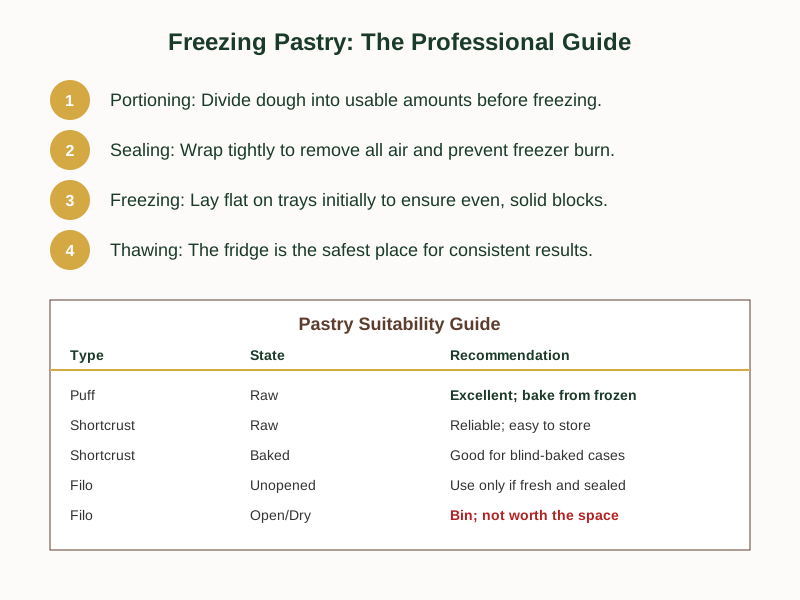
As a general guide, puff pastry freezes excellently when raw and is often best baked directly from frozen. Raw shortcrust pastry is very reliable and stores well, while pre-baked shortcrust cases are also good for advance preparation. Freezing unopened filo pastry is possible if handled carefully, but freezing filo that is already open or dry is generally not recommended.
Common Pastry Freezing Questions
Can you refreeze pastry after thawing?
Each freeze-thaw cycle costs texture, and for the safety side of refreezing the Food Standards Agency guidance linked below is the place to check. If you’ve thawed more pastry than needed, consider baking it and freezing the cooked result rather than refreezing raw pastry.
Can I use pastry that cracked during freezing?
Cracked pastry can often be repurposed. Shortcrust pieces work well pressed into a tin for rustic tarts, while cracked puff pastry can be rerolled for informal baking where perfect layers aren’t essential.
What’s the maximum freezer storage time for pastry?
For best quality, use frozen pastry within three months. Texture and performance gradually decline with extended storage. Always label packages with dates and practise first-in-first-out rotation.
The general principle with pastry is that freezing before baking preserves structure better than freezing after. Raw pastry typically withstands freezing better because its unbaked foundation remains intact, whereas baked items risk losing crispness. Understanding this helps you decide which pastries are worth freezing and how to handle them. For more on how dairy quality affects pastry results, our dairy hub explores how butter characteristics influence different baking projects.
Now you know what to freeze and how to pack it—Download the Free Freezer Labelling and Portioning Checklist to keep track of everything properly.
Related Guides
For a complete overview, see our Freezing Dairy, Eggs and Baking: What Survives, What Changes and What to Use It For .
Sources & Further Reading
Note: This is general guidance only. Please verify specific details with a qualified professional or official source.