Freezing Vegetables, Fruit and Herbs: What Goes Soft and What Holds Up
A bag of salad, a glut of tomatoes, and carrots you will not finish. The mistake is treating them as one job. Water in the cells turns to ice, the ice splits the cell walls, and the food comes back as soft as the amount of water it held. Cucumber and lettuce are almost all water. They collapse, and there is no dish that wants the result. Carrots, broccoli and cauliflower have less of that free water. Blanch them, stop the heat in ice water, dry them, and they are a cooking vegetable. Raw potatoes are the other hard no. Cook them first.
That is the rule. Everything else on this page is which produce follows it, and which guide to open when you are holding that particular bag.
Water is the decision, not the freezer dial
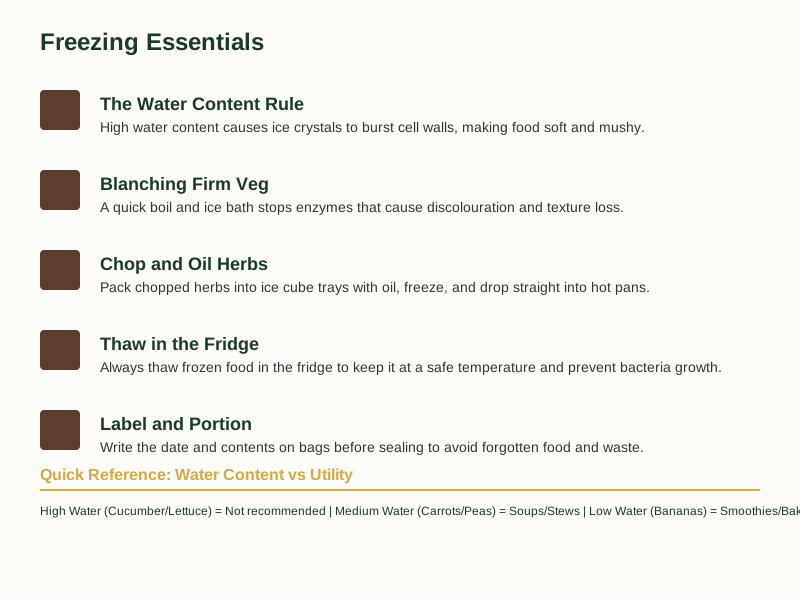
Plant cells are bags of water. Freeze them and the water expands into crystals that puncture the walls. Thaw them and the structure is gone. A cucumber slice becomes a wet rag. A lettuce leaf becomes mush. There is no packing trick that gives either of them back a crunch, so they do not earn the space. Salad leaves go the same way.
Tomatoes are just as wet, and they are still worth freezing, because you were never going to eat them for crunch. The split skin and the collapsed flesh are what a sauce wants. Freeze them whole or in chunks for the pot. Do not put a thawed tomato on a plate and call it a salad. That split is in whole, chopped or sauce .
Courgettes and other high-water vegetables you meant to eat raw belong with the cucumber. If the dish will cook them until soft anyway, freezing is a rescue. If you wanted them firm, buy them again.
Firm vegetables are the ones to bother with: carrots, broccoli, cauliflower, peas, beans, sweetcorn. They soften, and they still hold a shape you can put in a stew, a curry or a tray of roasting vegetables. The guide to freezing vegetables without mush is the dry-surface rule that sits under all of this. A wet pepper or a wet floret freezes its rinse-water into a sheet of ice, and that ice does more damage than the vegetable’s own moisture.
Blanch the firm ones. Do not blanch the wet aromatics
Blanching is a short boil that stops the enzymes which keep dulling colour and flavour after the vegetable is frozen. Freezing slows those enzymes. It does not switch them off. Leave broccoli raw for a long spell and it olives and tastes stale.
The step people skip is the ice bath, and the step after that is drying. Have the ice water ready before the florets go into the pan. The moment they come out, the residual heat is still cooking them. Plunge them until they are cold, then pat them dry on a tea towel. Surface water becomes the ice that glues florets into a brick and turns the outside mushy. Times differ by vegetable. They live in how to blanch, step by step and in broccoli and cauliflower . Do not use one number for both.
Do not blanch peppers, onions or mushrooms. The boil adds water they do not need, and you were going to cook them anyway.
Onions. Chop them raw and freeze the pieces. A whole onion thaws into a slippery mess and wastes the space. Caramelised onions are already broken down, so freezing changes little. No blanch. Straight into the pan from frozen. Detail is in chopped, whole or caramelised .
Peppers. Raw slices are for a hot pan, a stew or a sauce. They will not go in a sandwich. Roasted peppers, skin off, are the ones to freeze when you want the flavour rather than a shortcut. Whole chillies are the set-and-forget version. Methods are in whole, sliced or roasted peppers .
Mushrooms. Do not blanch them, and do not expect a raw punnet tipped into a bag to come back with any bite. They are mostly water in a sponge. Raw-frozen mushrooms are for a soup or a sauce you will blend or simmer until the texture no longer matters. If you want pieces that hold in a pan, sauté or steam them first, cool them, then freeze. That cook-first method is in raw or cooked mushrooms .
Leeks. Slice and blanch. The layers trap water, and a raw leek comes back soft, watery and stringy. Cooked leeks are the other route when you already have them in a pan. Whole raw leeks are not worth it. See whole, sliced or cooked leeks .
Garlic. Freeze whole unpeeled cloves and grate them from frozen into the pan. For minced portions, cover the mince with water in an ice-cube tray, not oil. Garlic left in oil is the Food Standards Agency’s problem, and the warning sits in whole cloves, minced or paste . This page does not invent a storage rule of its own.
Potatoes are a cooked-food question
Raw potatoes are not worth the freezer. The cells are full of water and uncooked starch. Thaw them and you have grey, grainy mush. Keep a raw bag in a cool, dark cupboard.
Cook first. Mash is the one that comes back well, because butter and cream coat the starch and limit how much water it can bind. A dairy-rich mash is a bubble-and-squeak or a pie topping. Roast potatoes lose the bit you froze them for: the crust is a thin dry layer that drinks moisture as it thaws and goes soft. Use those in a cottage pie, not as a roast. Boiled potatoes for a salad go watery. Turn them into mash. Chips go limp. Shop-bought frozen chips are already made for this; homemade ones are a compromise. The split is in mash, roast, chips and raw .
Sweet potatoes want the same order: cook first. Mash, soup and pie fillings hold. A raw whole sweet potato freezes slowly, burns at the surface, and roasts into dry grain with none of the caramel edge. Sugar in the cooked flesh is why a sweet-potato mash fares better than a floury white potato. It is not a reason to freeze them raw. See whole, mashed or chips .
Herbs are a flavour cube, not a garnish
Ice ruins the leaf. A thawed basil leaf will not sit on a salad. Frozen herbs are for the pan.
Love Food Hate Waste says wash and dry the herbs you cook with, then freeze them whole in a bag or chopped into ice-cube trays covered with water, and cook them from frozen in a stew or a sauce. It also tells you to freeze leftover herbs in olive oil, a cube at a time, and drop that into the pot. How long WRAP considers them worth keeping is on that page.
Oil is the method when the flavour is the point. Soft herbs — basil, coriander, mint, parsley — lose their aroma in water and scorch into freezer burn if you freeze them dry. Blend them with enough olive oil to make a paste, freeze the paste in a tray, and bag the cubes. Water cubes are for a big pot of soup or stock, where the extra water disappears. Woody herbs — rosemary, thyme, sage — can be stripped and frozen dry on a tray. They go crumbly and they still flavour a roast. The three methods are judged in oil, water or dry .
Fruit: peel, tray, or mash
📺 Watch: Top Tips for Freezing Garden Produce
Bananas: peel them. The skin freezes into a rubber shell you will fight with a knife. Whole or in coins, they go soft and dark, which is what a smoothie or a banana bread wants. They are not a fruit bowl.
Berries: dry them, spread them so they do not touch, freeze until solid, then bag. Wet berries weld into one block. Thawed berries are juice, not a fruit salad. Crumbles, cakes and blenders are the job.
Avocado will not be a sliced half on toast again. The flesh browns and turns stringy. Mash it with lemon or lime first, flatten the bag, and use it blended: a smoothie, a guacamole base, a sauce. That is rescue, not a way to keep avocado looking fresh.
The methods are in bananas, berries and avocado .
Defrost for the dish, not for a plate of raw veg
The Food Standards Agency’s page on chilling, freezing and defrosting says defrost in the fridge, and it is where to check how soon to use food once it has thawed. Most of this produce never needs that wait. Peppers, onions, berries and herb cubes go from the bag into a hot pan or a blender. A whole bag of broccoli you intend to roast is the thing to thaw, on a plate, so the middle is not still ice when the tray goes in.
Label the bag while you can still tell parsley from coriander. The Freezer Labelling and Portioning Checklist is the simple system for that.
What to freeze, and what to leave
| Produce | What happens | The job | Skip it when |
|---|---|---|---|
| Cucumber, lettuce, salad leaves | Collapse to water | None | Always. Do not freeze them |
| Tomatoes | Skin splits, flesh collapses | Sauce, soup, a pan | You wanted them in a salad |
| Carrots, peas, beans, sweetcorn | Soften, still hold | Soups, stews, curries | You wanted them raw and crisp |
| Broccoli, cauliflower | Hold if blanched, iced and dried | Stir-fries, gratins, roasting | You skipped the drying |
| Peppers | Go limp | Hot pans, stews; roast them for flavour | A sandwich or a salad |
| Onions, chopped | Soften in the pan | Soups, curries, from frozen | You froze a whole onion |
| Mushrooms, cooked first | Hold in a sauce | Pans and pies | You wanted them raw and firm |
| Mushrooms, raw | Water out, no bite | Blended soup only | Anything with texture |
| Leeks, sliced and blanched | Stay usable | Soups and pies | You froze them raw and whole |
| Garlic, whole cloves | Grates from frozen | The pan | You stored mince in oil |
| Raw potatoes | Grey, grainy mush | None | Always. Cook first |
| Mash with butter or cream | Comes back creamy | Pies, bubble and squeak | — |
| Roast potatoes | Crust goes soft | A pie, not a roast dinner | You wanted the crisp |
| Sweet potato, cooked | Mash and soup hold | Those dishes | You froze a raw whole one |
| Soft herbs in oil | Flavour holds, leaf does not | The pan | A garnish |
| Woody herbs, dry | Crumbly, still fragrant | Roasts and stews | You needed a pretty leaf |
| Bananas, peeled | Soft and dark | Smoothies, baking | You wanted to slice them fresh |
| Berries, tray-frozen dry | Juice, not crunch | Crumbles, cakes, blenders | A fruit salad |
| Avocado, mashed with citrus | Brown, no slice | Blended sauces and smoothies | Toast |
I’d freeze the chopped onion, the blanched broccoli and the peeled bananas, and I would bin the idea of freezing the cucumber. A “don’t” saves more space than another bag of mush.
Open the guide that matches what is in your hand:
- How to Freeze Vegetables Without Them Going Mushy
- Can You Freeze Fruit? Bananas, Berries and Avocado – Best Methods
- How to Freeze Onions: Chopped, Whole or Caramelised – Texture Changes
- How to Freeze Peppers: Whole, Sliced or Roasted – What Works Best
- Can You Freeze Garlic? Whole Cloves, Minced or Paste – What Changes
- Can You Freeze Leeks? Whole, Sliced or Cooked – Best Methods
- Can You Freeze Mushrooms? Raw or Cooked – Texture and Best Uses
- Can You Freeze Tomatoes? Whole, Chopped or Sauce – Best Uses
- Can You Freeze Broccoli and Cauliflower? Blanching Guide for Best Texture
- Can You Freeze Potatoes? Mashed, Roast, Chips and Raw – What Works
- Can You Freeze Sweet Potatoes? Whole, Mashed or Chips – Texture Changes
- How to Blanch Vegetables for Freezing, Step by Step
- How to Freeze Fresh Herbs: Oil, Water or Dry – Which Preserves Flavour
Download the Freezer Labelling and Portioning Checklist and write the crop on the bag before it disappears under the peas.
Related Guides
Sources & Further Reading
Note: General guidance only, verify details with a qualified professional or official source.